
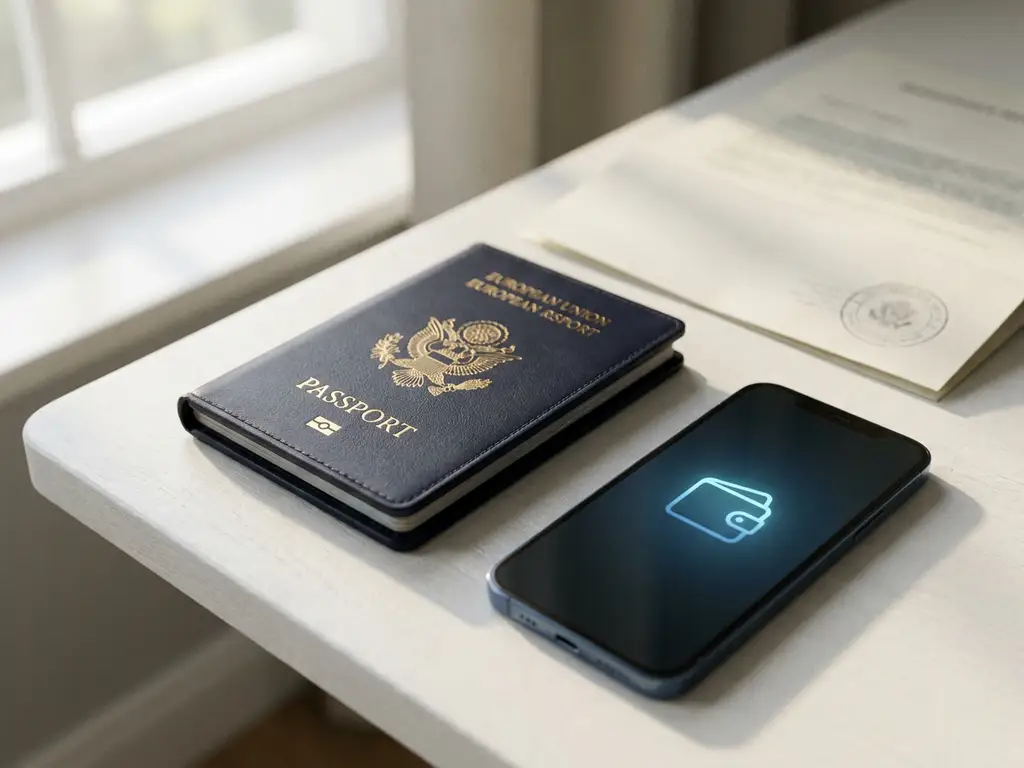
eIDAS 2.0 directly affects e-commerce identity verification by raising the bar for how online businesses must confirm who their customers are. The regulation introduces the European Digital Identity Wallet (EUDI Wallet) and strengthens requirements for trusted digital identity across the EU, applying to both public and private sector services, including online retail. This article walks through the most important questions e-commerce businesses are asking right now.
What changes does eIDAS 2.0 bring to online identity checks?
eIDAS 2.0 expands the original eIDAS framework by making digital identity verification more standardized, more secure, and more widely applicable across the EU. Where the original regulation focused primarily on public sector services, eIDAS 2.0 extends its scope to private sector platforms, including e-commerce. This means online businesses can no longer treat digital identity as an optional consideration.
The most significant change is the introduction of the EUDI Wallet, a government-backed digital identity solution that every EU Member State must make available to citizens and businesses. Alongside this, eIDAS 2.0 tightens the assurance levels required for certain types of online interactions, meaning that a simple username and password is no longer sufficient for transactions that carry meaningful risk.
For e-commerce businesses, this translates into a need to support identity verification methods that are interoperable across EU borders, privacy-preserving by design, and aligned with defined assurance levels. The regulation also gives users greater control over their personal data, which means businesses must rethink how they collect, store, and use identity information during onboarding and checkout.
Which e-commerce transactions require stronger identity verification under eIDAS 2.0?
Not every online purchase requires enhanced identity verification under eIDAS 2.0, but several transaction types do. The regulation targets interactions where there is meaningful risk, a legal obligation, or a need to confirm specific attributes about the user, such as their age, identity, or professional status.
Transactions that typically require stronger identity checks include:
- Age-restricted purchases such as alcohol, tobacco, gambling services, or adult content, where verifying the user’s age is a legal requirement
- High-value financial transactions where payment initiation or account access must meet strong customer authentication standards
- Regulated product sales such as prescription medications or controlled substances, where the buyer’s identity must be confirmed before fulfillment
- Account creation on platforms that are classified as very large online platforms with more than 45 million users in the EU, or services subject to sector-specific rules
- Cross-border purchases where identity attributes need to be recognized and trusted across EU Member States
For many of these use cases, the EUDI Wallet offers a practical solution. A user can share only the necessary attribute, such as proof of being over 18, without revealing their full identity. This selective disclosure is one of the key innovations eIDAS 2.0 brings to online age verification and identity checks in e-commerce.
How does the EUDI Wallet work for e-commerce checkout?
The EUDI Wallet works as a secure digital app on a user’s smartphone that stores verified identity attributes issued by trusted sources, such as governments or qualified trust service providers. During e-commerce checkout, a user can share specific verified attributes with the retailer in a few taps, without having to fill out forms or upload documents manually.
Here is how the process works in practice:
- The e-commerce platform requests a specific identity attribute from the customer, for example proof of age or a verified name and address.
- The customer receives a prompt in their EUDI Wallet app and reviews what is being requested.
- The customer approves the share, releasing only the requested information and nothing more.
- The retailer receives a cryptographically verified response confirming the attribute, without storing unnecessary personal data.
- The transaction proceeds based on the verified response.
This process is faster and more privacy-friendly than traditional document uploads or manual KYC flows. Because the wallet is backed by government-issued identity data, the assurance level is high, meaning retailers can trust the result. Large-scale pilot programs across the EU have already tested this flow in real-world scenarios, including payments and age verification, generating valuable feedback that is shaping the final implementation.
What’s the difference between eIDAS 2.0 and existing KYC or age verification methods?
The key difference is trust, interoperability, and privacy. Existing KYC and age verification methods vary widely in quality, legal recognition, and cross-border validity. eIDAS 2.0 establishes a common EU-wide standard that any compliant organization can rely on, regardless of which Member State the user comes from.
Traditional KYC processes in e-commerce often involve collecting documents, running automated checks, and storing personal data. These flows can be slow, prone to fraud, and privacy-invasive. Age verification methods used today range from simple self-declaration to credit card checks, none of which provide a high level of assurance.
eIDAS 2.0 and the EUDI Wallet change this in three important ways:
- Higher assurance: Wallet credentials are issued by recognized authorities, making them far more reliable than self-reported data or document scans
- Selective disclosure: Users share only what is necessary, for example a yes or no answer to “is this person over 18,” rather than their full date of birth
- Cross-border recognition: A wallet issued in one EU country is recognized and accepted across all Member States, removing friction for international e-commerce
For businesses already running KYC processes, eIDAS 2.0 does not necessarily replace existing workflows entirely. Instead, it introduces a higher-quality input that can improve the reliability of identity checks while reducing the burden on users. Understanding how these frameworks connect is part of preparing your identity solutions for the new regulatory landscape.
When do e-commerce businesses need to be compliant with eIDAS 2.0?
The eIDAS 2.0 regulation entered into force on 20 May 2024, with the first implementing acts — covering technical specifications, security standards, and interoperability rules for the EUDI Wallet — adopted by the end of 2024. A second wave of technical implementing acts followed in 2025, addressing areas including qualified electronic archiving, validation, certificates, and qualified trust service providers.
By 24 December 2026, every EU Member State must have at least one certified EUDI Wallet operational and available to citizens, residents, and businesses. From that date, public authorities and public service providers are required to accept notified wallets as a means of identification. For private sector organizations, this milestone marks the point at which wallets become widely available and acceptance can be tested ahead of their own compliance deadline.
The acceptance obligation for regulated private sector parties takes effect on 24 December 2027, under Article 5f of the regulation. This applies within contexts where strong user authentication is legally or contractually required, and covers sectors including banking and financial services, healthcare, telecoms, energy, transport, education, social security, drinking water, postal services, digital infrastructure, digital services, and very large online platforms with more than 45 million users in the EU. General retailers not falling within these categories are not subject to the same mandatory acceptance obligation, though they may still benefit from supporting wallet-based verification.
The compliance timeline is therefore not a single hard deadline for all e-commerce businesses. Obligations differ depending on the type of service, the sector, and the specific rules that apply. Businesses in financial services, healthcare, and other regulated industries face earlier and stricter requirements than general retailers. However, any e-commerce platform that handles age-restricted products, high-risk transactions, or user accounts with personal data should treat these deadlines as a planning horizon, not a distant concern.
Early preparation matters because integrating EUDI Wallet support into existing checkout and onboarding flows takes time. Businesses that wait until obligations are formally enforced risk rushed implementations, compliance gaps, and a poor user experience. Organizations in the financial services sector in particular should already be reviewing how eIDAS 2.0 intersects with their existing authentication and KYC obligations.
How should online retailers prepare for eIDAS 2.0 identity requirements?
Online retailers should start by mapping which of their transactions and user interactions are likely to fall under eIDAS 2.0 obligations, then assess what changes their current identity verification flows need. This is not just a technical exercise. It involves compliance, product, legal, and IT teams working together to understand the regulatory requirements and their practical implications.
Practical steps to take now include:
- Conduct a transaction audit: Identify which products or services require age verification, identity confirmation, or strong authentication under existing or upcoming rules.
- Review your current identity stack: Understand what assurance levels your current verification methods provide and where they fall short of eIDAS 2.0 requirements.
- Assess EUDI Wallet readiness: Explore what it would take to accept wallet-based credentials at checkout and whether your technology partners support this.
- Update your data minimization practices: eIDAS 2.0 places strong emphasis on privacy and selective disclosure, so review what personal data you collect and whether you can reduce it.
- Follow the regulatory timeline: Keep track of national implementation plans in the markets where you operate, as timelines and specific obligations may vary by country.
Retailers should also look at how eIDAS 2.0 interacts with other regulations they already comply with, such as GDPR, PSD2, and sector-specific KYC rules. In many cases, a well-implemented digital identity strategy can simplify compliance across multiple frameworks at once. Exploring the broader resources on digital identity can help build a clearer picture of what is required.
How TrustTech helps with eIDAS 2.0 e-commerce identity verification
Navigating eIDAS 2.0 as an e-commerce business involves more than reading the regulation. It requires translating complex requirements into practical changes to your identity flows, technology stack, and compliance processes. That is exactly where TrustTech can make a difference.
TrustTech supports online retailers and organizations in regulated sectors by:
- Assessing your current identity verification setup against eIDAS 2.0 requirements
- Designing and implementing EUDI Wallet integration into your checkout and onboarding flows
- Advising on data minimization, selective disclosure, and privacy-by-design practices
- Connecting your digital identity strategy to broader compliance obligations such as KYC, AML, and strong customer authentication
- Providing sector-specific guidance for e-commerce businesses in financial services, healthcare, and other regulated industries
Whether you are just beginning to understand the implications of eIDAS 2.0 or ready to start implementation, TrustTech brings the technical depth and regulatory expertise to guide you through it. Get in touch with TrustTech to discuss how we can help your organization prepare for the future of digital identity in e-commerce.