
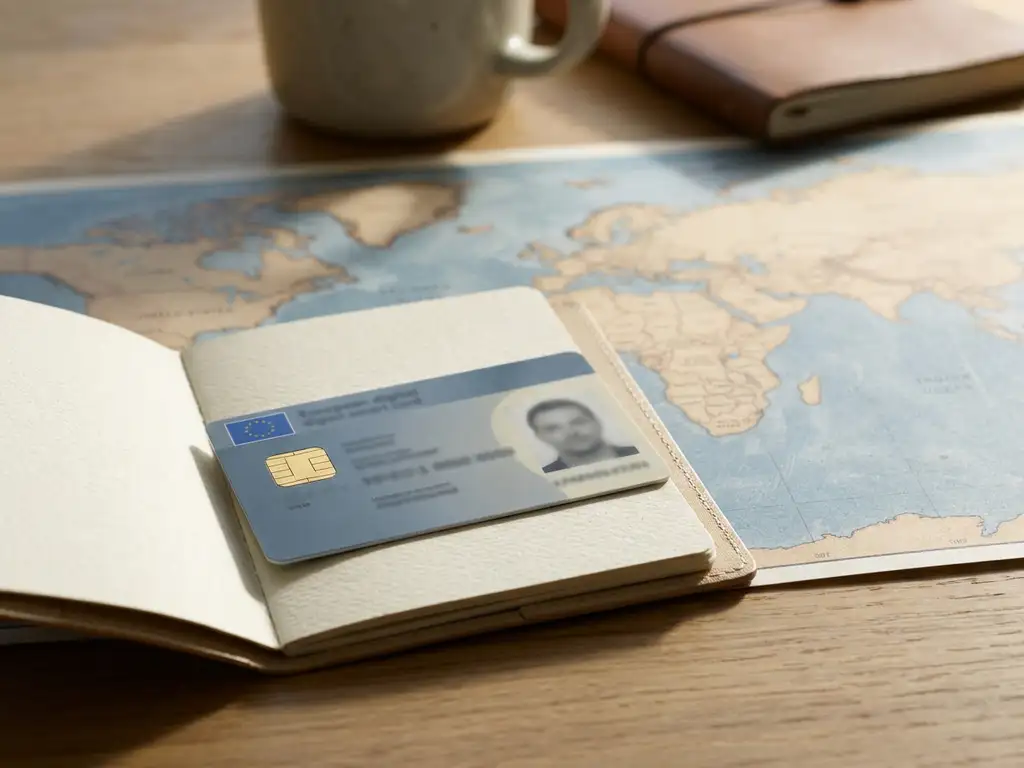
eIDAS 2.0 wallets are primarily designed for use within the European Union, but they are not strictly limited to EU borders. The European Digital Identity Wallet (EUDI Wallet) works wherever a relying party chooses to accept it, meaning non-EU services and organizations can technically integrate with the wallet framework if they meet the necessary requirements. This article unpacks where the wallet works today, what the regulation says about international use, and what organizations outside the EU need to know.
Where can an eIDAS 2.0 wallet actually be used today?
As of 2026, the EUDI Wallet can be used across all EU Member States for both public and private digital services. Any organization that qualifies as a relying party under the eIDAS 2.0 framework and registers accordingly can accept wallet credentials. In practice, this means the wallet works for services like opening a bank account, accessing government portals, signing contracts, and presenting professional qualifications.
The large-scale pilot programs that ran ahead of the official rollout tested the wallet across eleven real-world scenarios, including payments, healthcare prescriptions, mobile driving licenses, and educational credentials. These pilots involved over 350 entities from 26 Member States, as well as Norway, Iceland, and Ukraine, which signals that use is already extending beyond strict EU boundaries in specific contexts.
Within the EU, Member States are legally required to make the wallet available to all citizens, residents, and businesses. That means any person or organization operating inside the EU has a right to use it. The wallet is designed to work across borders within the EU, so a credential issued in Germany can be accepted in Portugal or Finland without any additional steps for the user.
Does eIDAS 2.0 have any provisions for use outside the EU?
eIDAS 2.0 does not include a formal mechanism that automatically extends wallet recognition to non-EU countries. However, the regulation does allow the European Commission to establish equivalence decisions, similar to how GDPR handles data transfers to third countries. Under such an arrangement, a non-EU country’s digital identity framework could be recognized as equivalent, enabling cross-border recognition beyond EU borders.
This is still largely forward-looking. No equivalence decisions for digital identity wallets had been formally adopted at the time of writing. However, the architecture of the EUDI Wallet is built on open standards, which means the technical groundwork for international interoperability is already in place. Countries and organizations that align with those standards are better positioned to integrate in the future.
It is also worth noting that eIDAS 2.0 governs how the EU recognizes identity, not how third parties outside the EU choose to use it. A non-EU service provider is free to accept EUDI Wallet credentials voluntarily, even without a formal equivalence decision, as long as they can technically connect to the wallet ecosystem and verify the credentials presented.
Can non-EU countries or services accept EUDI Wallet credentials?
Yes, non-EU countries and services can accept EUDI Wallet credentials, but they are not required to do so under eIDAS 2.0. Acceptance is entirely voluntary for organizations outside the EU. Any service provider, regardless of where it is based, can choose to integrate with the EUDI Wallet framework as a relying party if it has the technical capability to verify the credentials.
For a non-EU organization to accept EUDI Wallet credentials in practice, it would need to:
- Understand the technical standards underlying the wallet, particularly the Architecture and Reference Framework developed by the eIDAS Expert Group
- Build or integrate verification infrastructure that can process verifiable credentials in the formats the wallet supports
- Ensure its data handling practices align with GDPR where EU citizens’ personal data is involved
- Register or identify itself as a relying party in a way that the wallet ecosystem can recognize
- Communicate clearly to users which data they are requesting and why
In sectors like international finance, cross-border healthcare, and global education, there is growing interest in accepting EUDI Wallet credentials because they offer a high level of assurance. A credential issued through the EUDI Wallet is cryptographically verified and tied to a government-recognized identity, which is a strong foundation for trust even outside the EU.
How does eIDAS 2.0 compare to other international digital identity frameworks?
eIDAS 2.0 is one of the most comprehensive and legally binding digital identity frameworks in the world. While other regions have developed national or regional digital identity initiatives, few match the scale, legal enforceability, and interoperability ambition of the EUDI Wallet. The key difference is that eIDAS 2.0 creates a single, harmonized framework across 27 Member States with mandatory participation and high assurance standards.
By contrast, frameworks in countries like the United States, Canada, or Australia tend to be more fragmented, with identity systems varying by state, province, or sector. Some countries are developing national digital identity wallets inspired in part by the EU model, but these remain separate ecosystems without formal interoperability agreements with eIDAS 2.0.
The United Kingdom, following Brexit, developed its own digital identity framework under the UK Digital Identity and Attributes Trust Framework. While it shares some philosophical similarities with eIDAS, it operates independently and does not automatically recognize EUDI Wallet credentials. Organizations operating in both the EU and the UK therefore need to consider both frameworks separately, though the underlying standards often overlap.
Internationally, bodies like the International Organization for Standardization (ISO) and the World Wide Web Consortium (W3C) are working on standards for verifiable credentials and mobile driving licenses that underpin both eIDAS 2.0 and other frameworks. This shared technical foundation makes future interoperability more achievable, even where legal recognition is not yet in place.
What should organizations outside the EU know about eIDAS 2.0 compliance?
Organizations outside the EU are not directly subject to eIDAS 2.0 obligations, but they are affected by it if they offer services to EU residents or handle EU-issued identity data. If your organization allows EU citizens to authenticate, sign documents, or share identity attributes, you may need to accept EUDI Wallet credentials as part of your onboarding or verification flow, depending on how the regulation is applied to your sector.
There are several practical considerations for non-EU organizations:
- GDPR still applies: Any time you process personal data from EU residents, including identity data from an EUDI Wallet, GDPR requirements apply regardless of where your organization is based
- Sector-specific rules may trigger eIDAS alignment: Financial services, healthcare, and other regulated sectors operating in the EU may face requirements to accept high-assurance identity credentials, which in practice means EUDI Wallet compatibility
- Technical readiness is a strategic advantage: Organizations that build wallet-compatible verification infrastructure now will be better positioned to serve EU customers and partners as adoption grows
- Equivalence decisions could change the picture: If the European Commission recognizes a third country’s framework as equivalent, cross-border recognition becomes much simpler, so monitoring these developments matters
For organizations in financial services or healthcare with any EU exposure, understanding the eIDAS 2.0 landscape is not optional. Even if formal compliance is not yet required, customer expectations and partner requirements are already shifting. Organizations that treat eIDAS 2.0 as a purely European concern risk being unprepared when their EU-based counterparts or customers expect wallet-based interactions as standard.
How TrustTech helps with eIDAS 2.0 and international digital identity
Navigating the international dimensions of eIDAS 2.0 is complex, and most organizations, whether inside or outside the EU, are still working out what it means for their operations. TrustTech helps organizations make sense of these requirements and translate them into practical, scalable identity infrastructure.
Working with organizations across regulated sectors, TrustTech provides:
- eIDAS 2.0 readiness assessments that identify gaps in your current identity and compliance infrastructure
- EUDI Wallet integration support so your organization can accept and verify wallet credentials from EU users
- Reusable digital identity solutions built on European standards, enabling faster onboarding and fewer repeated verification steps
- Cross-border interoperability guidance for organizations operating in multiple jurisdictions, including those bridging EU and non-EU markets
- Qualified electronic signatures and trust services that are eIDAS 2.0 compliant by design
Whether you are a government body, a financial institution, or a global enterprise with EU operations, TrustTech’s digital identity solutions are designed to meet you where you are and help you move forward with confidence. Our approach combines deep regulatory knowledge with hands-on implementation expertise, so you get clarity and results, not just advice. Ready to understand what eIDAS 2.0 means for your organization? Get in touch with TrustTech and start the conversation today.