
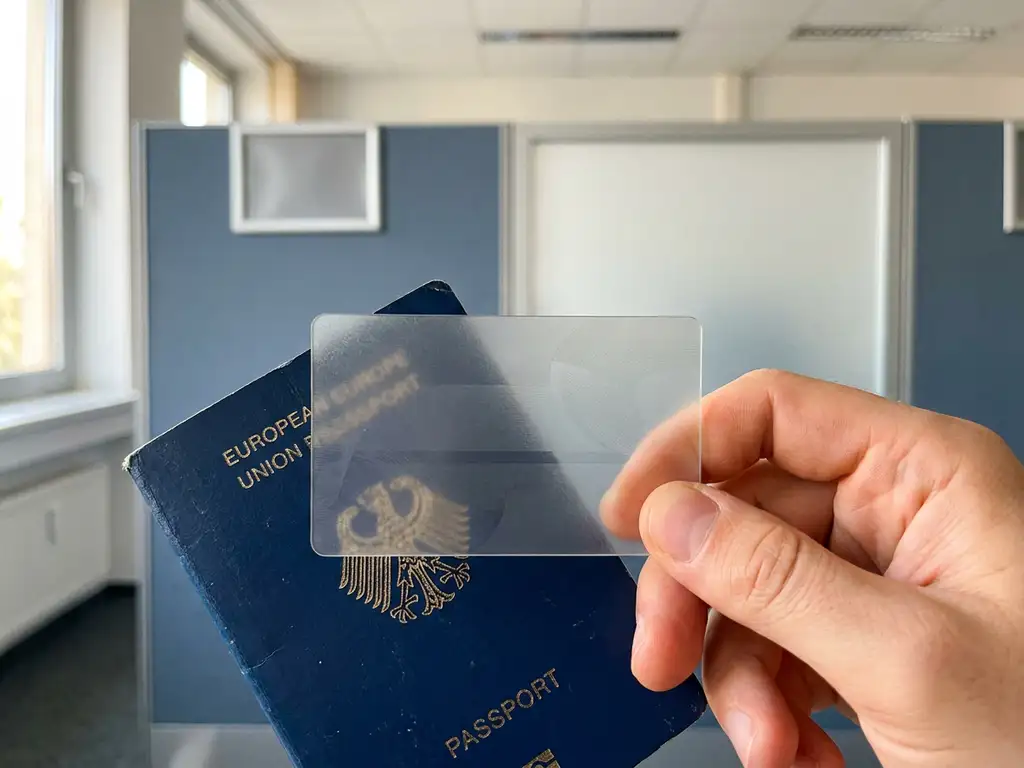
eIDAS 2.0 enables privacy-preserving identity proofing by giving individuals control over exactly which personal data they share, with whom, and when. Rather than presenting a full identity document, users can disclose only the specific attributes a service requires. This shift is built directly into the European Digital Identity Wallet and the technical standards that underpin it. The sections below unpack how each privacy mechanism works and what it means in practice.
What does privacy-preserving identity proofing actually mean under eIDAS 2.0?
Privacy-preserving identity proofing under eIDAS 2.0 means verifying who someone is, or confirming a specific attribute about them, without exposing more personal data than is strictly necessary for the transaction. Instead of sharing a full identity profile, a person proves only what is needed, and the relying party receives only that. This is a fundamental departure from traditional identity verification, where a full document scan or data set is typically required.
Under the original eIDAS framework, privacy protections were limited and inconsistently applied across Member States. eIDAS 2.0 changes this by embedding data minimisation directly into the architecture of the European Digital Identity Wallet. The regulation aligns closely with GDPR principles, making minimal disclosure not just good practice but a technical and legal requirement.
For organisations in sectors such as finance, healthcare, and government, this matters enormously. Identity proofing processes that once required collecting and storing large amounts of personal data can now be redesigned around verified claims. A user can prove they are over 18, that they hold a valid professional qualification, or that they are a resident of a particular country, without revealing their date of birth, full name, or home address.
How does selective disclosure work in the EUDI Wallet?
Selective disclosure in the EUDI Wallet allows a user to share individual attributes from a credential rather than the entire credential. When a service requests proof of a specific fact, the wallet presents only that fact, cryptographically verified, while keeping all other stored data private. The user sees exactly what is being shared before confirming.
This works through the use of verifiable credentials, a standardised format for digital attestations. A government-issued identity credential stored in the wallet might contain dozens of data fields. Selective disclosure means a user can respond to a request for age verification by releasing only a yes/no confirmation, rather than their full date of birth or passport number.
The technical foundation relies on credential formats that support attribute-level disclosure. The EUDI Wallet architecture references formats such as SD-JWT (Selective Disclosure JSON Web Token) and mdoc, both of which allow individual fields within a credential to be revealed or withheld independently. This is a significant technical advancement over traditional document-based verification, where presenting a physical ID card reveals everything on it.
For organisations building digital identity solutions, this means onboarding flows can be redesigned around minimum viable data. A financial services provider performing a KYC check does not need to receive and store a full identity document scan if a verified attribute from a trusted wallet issuer is sufficient to meet the regulatory requirement.
What role do zero-knowledge proofs play in eIDAS 2.0?
Zero-knowledge proofs (ZKPs) allow one party to prove to another that a statement is true without revealing the underlying data that makes it true. In the context of eIDAS 2.0 and digital identity privacy, this means a user can prove they meet a condition, such as being above a certain age or holding a valid credential, without disclosing the actual value behind that condition.
ZKPs represent the most privacy-preserving end of the selective disclosure spectrum. Where standard selective disclosure still reveals the specific value of a chosen attribute, a zero-knowledge proof reveals nothing except the truth of the claim. A user can confirm “I am over 21” without the verifier ever learning their actual date of birth.
The eIDAS 2.0 technical framework does not mandate zero-knowledge proofs for all use cases, but the Architecture and Reference Framework (ARF) for the EUDI Wallet does accommodate ZKP-compatible credential formats. This gives wallet providers and relying parties the option to implement the highest level of privacy protection where the use case requires it.
For regulated sectors such as healthcare and pharmaceuticals, where sensitive personal data carries significant legal and ethical weight, ZKPs offer a compelling path toward compliance without unnecessary data exposure. The technology is maturing rapidly, and organisations planning their implementation approach should consider where ZKPs can replace attribute-level disclosure in their verification flows.
How does eIDAS 2.0 prevent identity tracking across services?
eIDAS 2.0 prevents cross-service identity tracking by requiring that wallet interactions do not allow different relying parties to correlate a user’s activity with each other. This is achieved through the use of unlinkable pseudonyms and the prohibition of shared identifiers that could be used to build a profile of a user’s behaviour across services.
One of the core privacy risks in digital identity systems is the creation of a global identifier, a single ID that every service receives, which can be used to track a person’s interactions across the internet. eIDAS 2.0 explicitly addresses this by requiring that the EUDI Wallet generates different pseudonymous identifiers for different relying parties. Two services cannot compare notes and determine that the same person used both of them, unless the user explicitly consents to that linkage.
This design principle reflects the broader philosophy of digital identity privacy embedded in the regulation. Users maintain sovereignty over their own data trail. The wallet acts as a privacy-preserving intermediary, not a broadcaster of identity signals.
Organisations that currently rely on shared identity tokens or centralised identity brokers should note that eIDAS 2.0 requires a rethink of how identity data flows through their systems. Sectors such as government services and financial services, where cross-referencing user data across platforms has been common, will need to adapt their architectures to align with these unlinkability requirements.
What are the limits of privacy protection under eIDAS 2.0?
eIDAS 2.0 provides strong privacy protections by design, but it does not make identity transactions completely anonymous. Wallet issuers, which are typically government bodies or officially recognised providers, have visibility into the credentials they issue. Relying parties still receive the attributes they request. And legal obligations such as AML and KYC can require disclosure that overrides minimal sharing preferences.
It is worth being clear about what eIDAS 2.0 does and does not protect:
- It does not guarantee anonymity. Verified identity proofing inherently requires that someone knows who the user is at the point of issuance. The wallet issuer holds that knowledge.
- It does not override legal disclosure requirements. Regulated sectors such as banking and healthcare may be required by law to collect and retain specific identity data, regardless of what the wallet’s minimal disclosure settings allow.
- It depends on correct implementation. Privacy guarantees only hold if relying parties and wallet providers implement the technical standards correctly. A poorly integrated service could still request more data than necessary, and users may not always recognise when this happens.
- Device security matters. The privacy of wallet data depends in part on the security of the device on which the wallet is stored. A compromised device undermines privacy protections at the technical level.
Understanding these boundaries is important for organisations building compliance frameworks around eIDAS 2.0. Privacy-by-design is a genuine structural improvement, but it is not a blanket solution to all identity privacy challenges.
How should organisations prepare for privacy-by-design identity proofing?
Organisations should prepare for privacy-by-design identity proofing by auditing their current data collection practices, identifying where they collect more identity data than their processes actually require, and redesigning verification flows around verifiable credentials and selective disclosure. The shift from document-based to attribute-based identity verification is both a technical and a process change.
A practical preparation roadmap looks like this:
- Map your current identity data flows. Understand what personal data you collect during onboarding and verification, why you collect it, and what you actually use it for.
- Identify minimum viable data requirements. For each verification step, define the minimum set of attributes you need to meet your legal and operational obligations.
- Assess your systems for verifiable credential readiness. Check whether your identity infrastructure can receive and validate credentials in EUDI Wallet-compatible formats such as SD-JWT or mdoc.
- Review your legal basis for data processing. Ensure your GDPR documentation reflects the shift to attribute-based data collection, including updated data retention policies.
- Engage with your sector’s regulatory guidance. Sectors such as financial services and healthcare may have specific guidance on how eIDAS 2.0 interacts with existing AML, KYC, or patient data regulations.
Organisations that treat this transition purely as a compliance exercise will miss the opportunity it represents. Privacy-preserving identity proofing reduces the data you hold, which reduces your risk exposure. It also removes friction for users, who no longer need to repeatedly prove the same things to different services.
How TrustTech helps with privacy-preserving identity proofing
TrustTech is built specifically to help organisations navigate the transition to eIDAS 2.0-compliant, privacy-by-design identity infrastructure. Rather than treating privacy and compliance as competing priorities, TrustTech’s platform brings them together in a single, interoperable identity layer.
Concretely, TrustTech supports your organisation by:
- Enabling reusable, cryptographically verified identity so users verify once and share only what is needed across every interaction
- Supporting selective disclosure and verifiable credentials in formats aligned with the EUDI Wallet architecture
- Providing an identity infrastructure that is eIDAS 2.0 ready by design, reducing implementation risk and time to production
- Connecting identity proofing, qualification checks, and qualified digital signatures in one trusted platform
- Serving regulated sectors including finance, government, healthcare, and science with practical implementation expertise
If your organisation is ready to move from understanding eIDAS 2.0 to acting on it, get in touch with TrustTech to explore how privacy-preserving identity proofing can work for your specific context.