
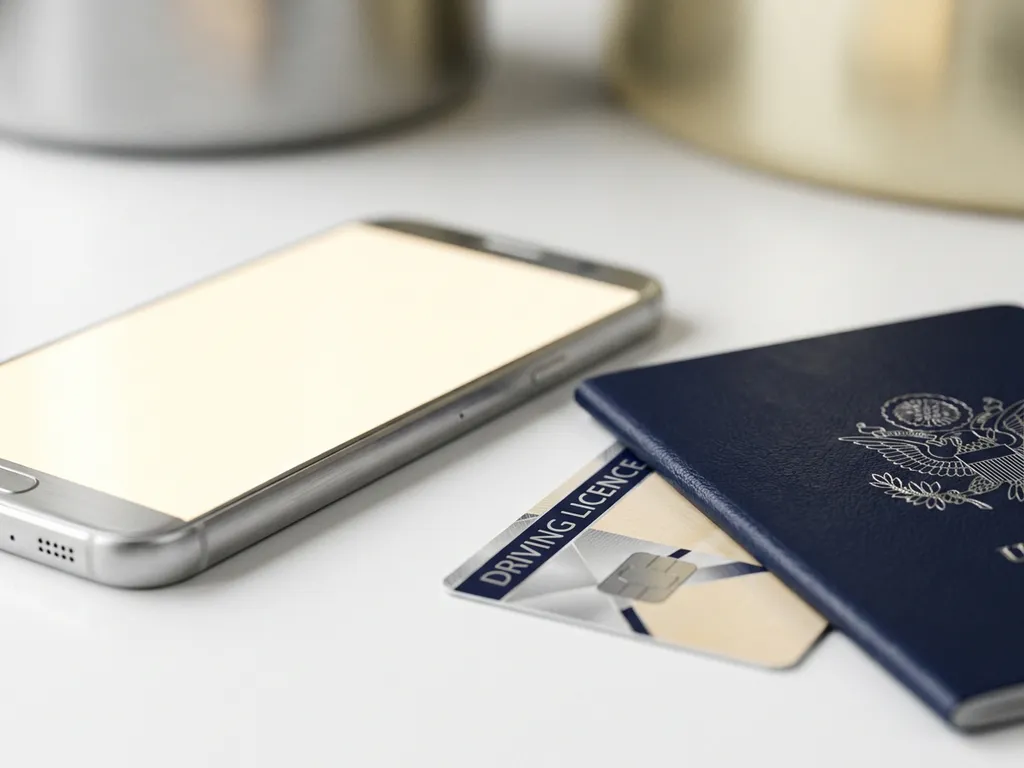
Yes, the EUDI Wallet can store both driving licences and passports. Under eIDAS 2.0, the European Digital Identity Wallet is specifically designed to hold official identity documents in digital form, including mobile driving licences and travel documents such as passports. Member States are required to make these wallets available to all citizens, residents, and businesses by 24 December 2026. This article walks through exactly how each document type works, what makes them legally valid, and when you can expect them to be widely available.
Which documents can the EUDI Wallet actually store?
The EUDI Wallet is designed to store a wide range of official and personal documents in digital form. This includes driving licences, passports, visa information, health insurance cards, educational diplomas, prescriptions, and employment credentials. The wallet acts as a secure, user-controlled container for any document that can be issued as a verified digital credential by an authorised organisation.
The Large Scale Pilots currently testing the wallet across 26 EU Member States, Norway, Iceland, and Ukraine have been specifically exploring eleven real-world use cases. These give a clear picture of the document types the wallet is built to support:
- Government-issued identity documents such as national IDs and passports
- Mobile driving licences for both online and physical verification
- European Health Insurance Cards
- Educational certificates, diplomas, and degrees
- Prescription details for use at pharmacies
- Organisational identity credentials proving you represent a company
- Social security documents and benefit access credentials
The key principle behind the wallet is selective disclosure. You do not have to share an entire document to prove one fact about yourself. For example, you can confirm your age without revealing your home address. This privacy-first approach is built into the eIDAS 2.0 regulation itself.
How does the EUDI Wallet store a driving licence digitally?
The EUDI Wallet stores a driving licence as a mobile driving licence (mDL), a standardised digital credential issued by the relevant national authority. Rather than a scanned image of a physical card, the mDL is a structured, cryptographically secured data object that can be verified instantly, both online and in person, such as during a roadside check.
The mobile driving licence use case has been one of the most actively tested scenarios in the Large Scale Pilots. In a physical interaction, the wallet can present the licence data directly from your smartphone to an authorised reader. In an online context, the same credential can be used to verify your driving entitlements without needing to upload a document or enter details manually.
Because the mDL is issued and cryptographically signed by a trusted national authority, the receiving party can verify its authenticity without contacting the issuer in real time. This makes the process faster and more reliable than traditional document checks. It also means you stay in control: you choose which data fields to share, so a car rental company can confirm you hold a valid licence without seeing your date of birth or home address.
Can a passport be stored in the EUDI Wallet?
Yes, passport information can be stored in the EUDI Wallet in the form of a Digital Travel Credential (DTC). This is not a copy of your physical passport, but a verified digital representation of the data it contains, issued by the relevant national authority and cryptographically secured. It can be used to confirm your identity and travel entitlements at border crossings, airports, and other access points.
The EU Digital Identity Wallet Consortium (EWC), one of the four Large Scale Pilot programmes, has been specifically focused on Digital Travel Credentials across Member States. Its work aims to make it possible to use your wallet at airport security and customs, replacing or supplementing the physical passport inspection process.
It is worth noting that the Digital Travel Credential in the wallet complements rather than immediately replaces the physical passport. Legal recognition for border crossings involving third countries outside the EU depends on international agreements that are still developing. Within the EU, however, the groundwork is being laid for wallet-based travel documents to be accepted as legally equivalent to physical ones.
What is the difference between a digital document and a verifiable credential?
A digital document is simply an electronic version of a paper record, such as a PDF of a certificate or a scanned ID. A verifiable credential is a structured, machine-readable data object that has been cryptographically signed by its issuer, meaning any receiving party can instantly confirm it is genuine, unaltered, and issued by a trusted source. The EUDI Wallet stores verifiable credentials, not just digital documents.
This distinction matters enormously in practice. A PDF can be forged or altered. A verifiable credential cannot be tampered with without breaking the cryptographic signature. When you present a credential from your wallet, the verifier does not need to call the issuing authority or run a background check. The credential itself carries proof of its own authenticity.
Verifiable credentials also support selective disclosure in a way that static documents cannot. A traditional passport shows everything at once. A verifiable credential derived from your passport can be configured to reveal only the specific attributes the situation requires, such as your nationality for a border check, without exposing your full date of birth or address. This is one of the core privacy improvements that eIDAS 2.0 credentials introduce compared to existing identity documents.
Are EUDI Wallet documents legally valid across EU member states?
Yes, under eIDAS 2.0, documents and credentials stored in the EUDI Wallet are intended to be legally valid and mutually recognised across all EU Member States. The regulation requires Member States to accept each other’s notified electronic identity schemes, and the EUDI Wallet is designed to operate as a standardised, interoperable framework that works seamlessly across borders.
This cross-border recognition is one of the central problems eIDAS 2.0 was designed to solve. The original eIDAS regulation from 2014 created a framework for mutual recognition, but uptake was uneven and private sector participation was limited. The updated regulation extends recognition obligations and opens the framework to private sector relying parties, meaning that regulated businesses in sectors such as banking, healthcare, and telecoms will be required to accept wallet-based credentials for relevant services, subject to their own sector-specific deadlines.
In practical terms, this means a mobile driving licence issued by a German authority should be accepted by a car rental company in Spain. A university diploma issued as a verifiable credential in the Netherlands should be readable and trusted by an employer in France. The interoperability standards being developed through the Large Scale Pilots are specifically designed to make this technical and legal recognition work smoothly in real-world conditions.
When will driving licences and passports be available in the EUDI Wallet?
Under eIDAS 2.0, each EU Member State must have at least one certified EUDI Wallet operational for citizens, residents, and businesses by 24 December 2026. From that date, public authorities and public service providers are required to accept notified wallets as a means of identification. Driving licences and passport-based travel credentials are among the priority use cases, with Large Scale Pilots having tested these scenarios extensively in the lead-up to this rollout.
The timeline has been progressing in structured phases. The revised eIDAS regulation entered into force on 20 May 2024, marking the starting point for subsequent deadlines. By the end of 2024, the first implementing acts had been adopted, covering technical specifications, security standards, and interoperability rules for the EUDI Wallet. In 2025, a second wave of technical implementing acts was published, addressing qualified electronic archiving, validation, certificates, and qualified trust service providers (QTSPs).
The four Large Scale Pilot programmes, launched in April 2023, ran until 2025 and collected real-world feedback on the wallet’s technical specifications, security, and usability. The insights from these pilots feed directly into the Architecture and Reference Framework that Member States use to build their wallet implementations.
That said, availability will not be uniform across all countries on the same date. Some Member States are further along in their implementation than others, and the specific documents available at launch will depend on what each national authority has prioritised. Mobile driving licences and digital travel credentials are high on the list, but full deployment across all use cases will be a gradual process through 2026 and beyond. It is important to note that a legal deadline marks the latest permissible date, not a guarantee that every Member State or organisation will reach full operational readiness simultaneously.
For regulated private sector organisations — including those in banking and financial services, healthcare, telecoms, energy, transport, education, social security, drinking water, postal services, digital infrastructure, and very large online platforms serving more than 45 million users in the EU — a separate acceptance obligation applies from 24 December 2027, where strong user authentication is legally or contractually required. This deadline is set twelve months after the wallet issuance and public acceptance deadline, and 36 months after the entry into force of the relevant implementing acts from November 2024.
- 20 May 2024: Revised eIDAS regulation entered into force
- End of 2024: First implementing acts adopted, including technical specifications, security standards, and interoperability rules
- 2025: Second wave of implementing acts published, covering qualified trust services, validation, and archiving
- 2023–2025: Large Scale Pilots tested driving licence, passport, and other credential use cases across 26 Member States and partner countries
- 24 December 2026: Member States legally required to have at least one certified EUDI Wallet available; public authorities required to accept notified wallets
- 24 December 2027: Acceptance obligation takes effect for regulated private sector organisations where strong authentication is required
For organisations in regulated sectors such as financial services, government, and healthcare, these deadlines are not distant horizons. Preparing systems to accept and process wallet-based credentials takes time, and the earlier that preparation begins, the smoother the transition will be.
How TrustTech helps with EUDI Wallet readiness
Getting ready for the EUDI Wallet, including support for digital driving licences, passport credentials, and other eIDAS 2.0 documents, requires more than awareness. It requires concrete steps: updating your identity verification flows, connecting to trusted issuers, and ensuring your systems can accept and validate verifiable credentials in a legally compliant way.
TrustTech supports organisations through every stage of this transition. Whether you are just beginning to map out the implications or ready to start implementation, TrustTech brings together the technical depth and regulatory expertise to move you forward. Specifically, TrustTech helps with:
- Assessing your current identity infrastructure against eIDAS 2.0 requirements
- Integrating wallet-ready identity verification into your existing onboarding and authentication flows
- Enabling reusable, verifiable credentials so your customers verify once and reuse everywhere
- Ensuring cross-border interoperability for organisations operating across EU Member States
- Supporting compliance with GDPR, AML, KYC, and eIDAS 2.0 within a single connected platform
Explore TrustTech’s digital identity solutions or learn more about how TrustTech works. If you want to understand what EUDI Wallet readiness looks like for your specific organisation, get in touch with TrustTech and start the conversation today.