ID connector
Support every certified wallet and ID
The ID Connector makes your services wallet-ready and eIDAS 2.0 compliant: one interface to every certified European wallet, and to every other ID. When every ID works, anyone can become your customer, wherever they are and whatever they hold.
Every ID in. One verified result out.
Today, every system builds every ID integration alone: one for each wallet, each eID scheme, each document check. The ID Connector replaces that with one verifier, one connection, three steps.
Your customer shows an ID
Whatever they hold: an EUDI wallet, a government eID, a bank login, a mobile driving licence or a physical document. Any of them works.
We check it with the party that issued it
Is the proof genuine, is it still valid, does it really belong to this person? The connector checks each of these with the issuer itself. The answer comes back with a level of certainty attached: substantial or high.
Your systems get one simple answer
One answer, in the same format every time, and your journey acts on it: a customer onboarded in one session, or access granted to a patient record. Whatever ID was shown, the result reads the same.
Every ID speaks a different language. We speak them all.
Behind every ID sits its own protocol: 27 national wallet implementations on the European standards, eID schemes, bank protocols, the ISO standard for driving licences, chip reads for physical documents. That translation work is the hard part of identity, and exactly the part we take off your hands. Your systems talk to one interface, OpenID Connect, the one they already know. We carry every protocol behind it, including the ones that don't exist yet.
Six things you can do once it is in place.
Each one covers work that a relying party would otherwise carry itself.
Reach every wallet and every ID from one integration
Build the journey once. Every wallet certified after that is reachable through the same interface, including business wallets and a wallet issued under your own brand, and so is every other ID the connector carries, from eIDs and bank logins to document reads. Supported on OpenID4VP and OpenID4VCI with the HAIP profile, SD-JWT VC and mdoc credentials, and DCQL queries.
Stay current as the framework develops
We track the eIDAS 2.0 implementing acts, the Architecture & Reference Framework and the wallet protocols. Each update ships through the connector. That includes your registration as a relying party, which the regulation opens from December 2026, and the acceptance obligation from December 2027.
EUDI Wallet integration, handled
To accept EUDI Wallets, relying parties must be registered, authenticate to the wallet with valid certificates, request only data covered by their registration, and validate the identity data and attestations they receive. The ID Connector handles the technical side of EUDI Wallet acceptance for organisations that need high-assurance customer identification, through one integration with their existing systems.
Run it on-premise or as a service
Deploy as a managed service, in your private cloud, or inside your own estate. The connector is containerised, with HSM and keystore integration for key material that has to remain under your control.
Embed it in your own interface
The flow runs under your brand, on your domain, inside the journey your customer already knows. Available as an API for teams building their own front end, or as a configurable white-label component.
Keep control of what you accept
You decide which wallets you accept, which attributes you ask for and which assurance level each journey requires. Configuration per journey, changed without a release, with every request bound to the purpose you registered for it.
The ID verifier in detail
Wallets and sources
-
Certified EUDI Wallets, all member states
-
Non-certified and business wallets
-
A wallet carrying your brand
-
DigiD and notified eID schemes
-
Bank login
-
NFC document read with liveness
-
Population register data
-
New sources connected on request
Trust & accountability
-
Relying-party registration under Article 5b
-
Relying-party access certificates
-
Wallet unit attestation checks
-
Revocation and status lists
-
Requests bound to registered purpose
-
DPA and sub-processor agreement per source
-
End-to-end audit trail per request
-
Supports your Wwft and GDPR obligations
Delivery & operations
-
Substantial and High assurance
-
Normalised result across every source
-
Automatic fallback between routes
-
White-label in your environment
-
Uptime and response by SLA tier
-
Containerised, or as a service
-
HSM and keystore integration
-
Sandbox with sample data
Standards
-
OpenID4VP and OpenID4VCI, HAIP profile
-
SD-JWT VC
-
ISO/IEC 18013-5 and -7 (mdoc, mDL)
-
DCQL credential queries
-
ETSI signature formats
-
EU trusted lists
-
Attribute mapping across sources
-
REST API and SDKs
Three products, one connection.
Each product runs on the same verifier and returns the same response format: the attributes you requested, who signed each one, the assurance level reached, and a reference to the logged request. One schema, so a journey built once reads them all.
PID
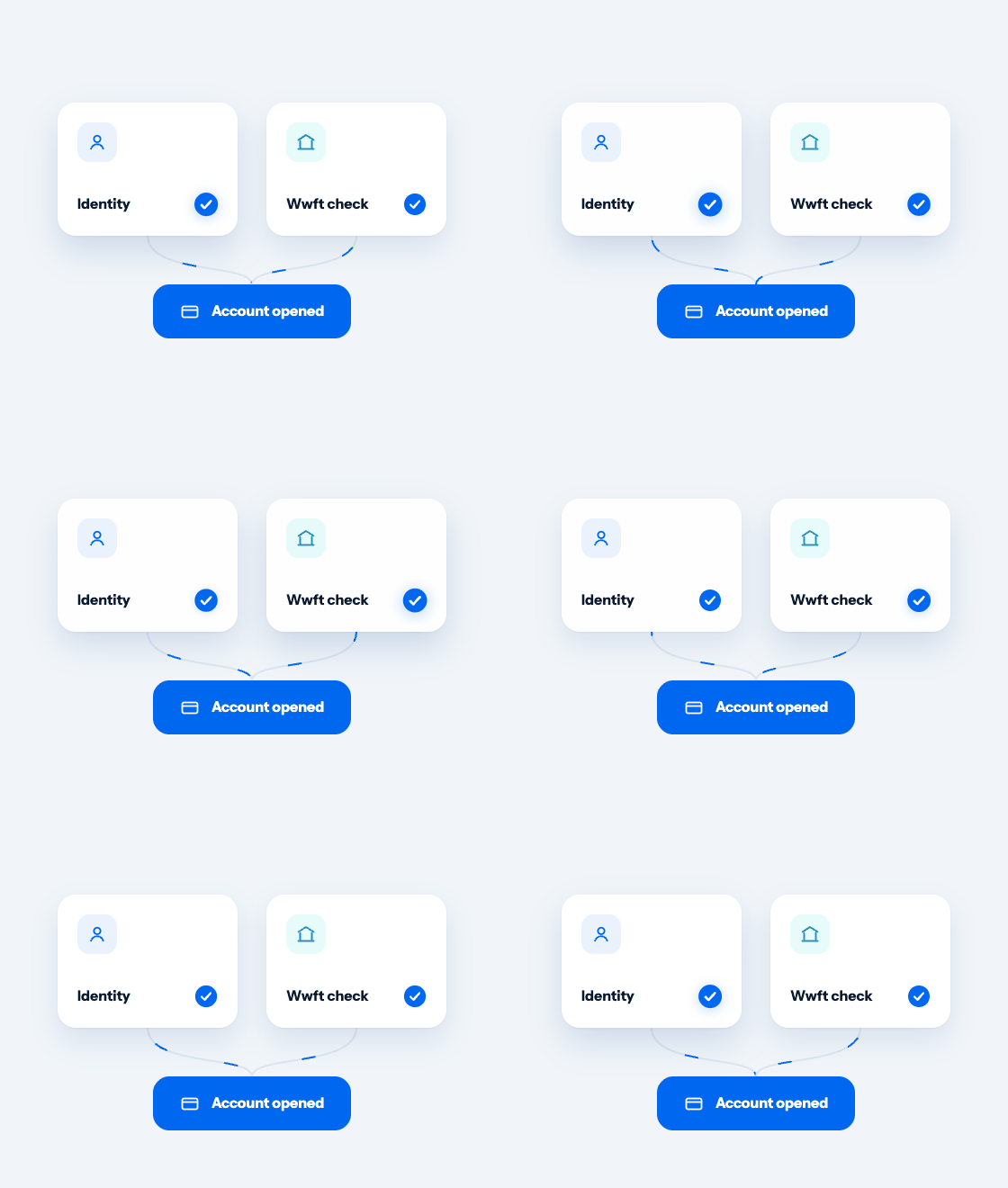
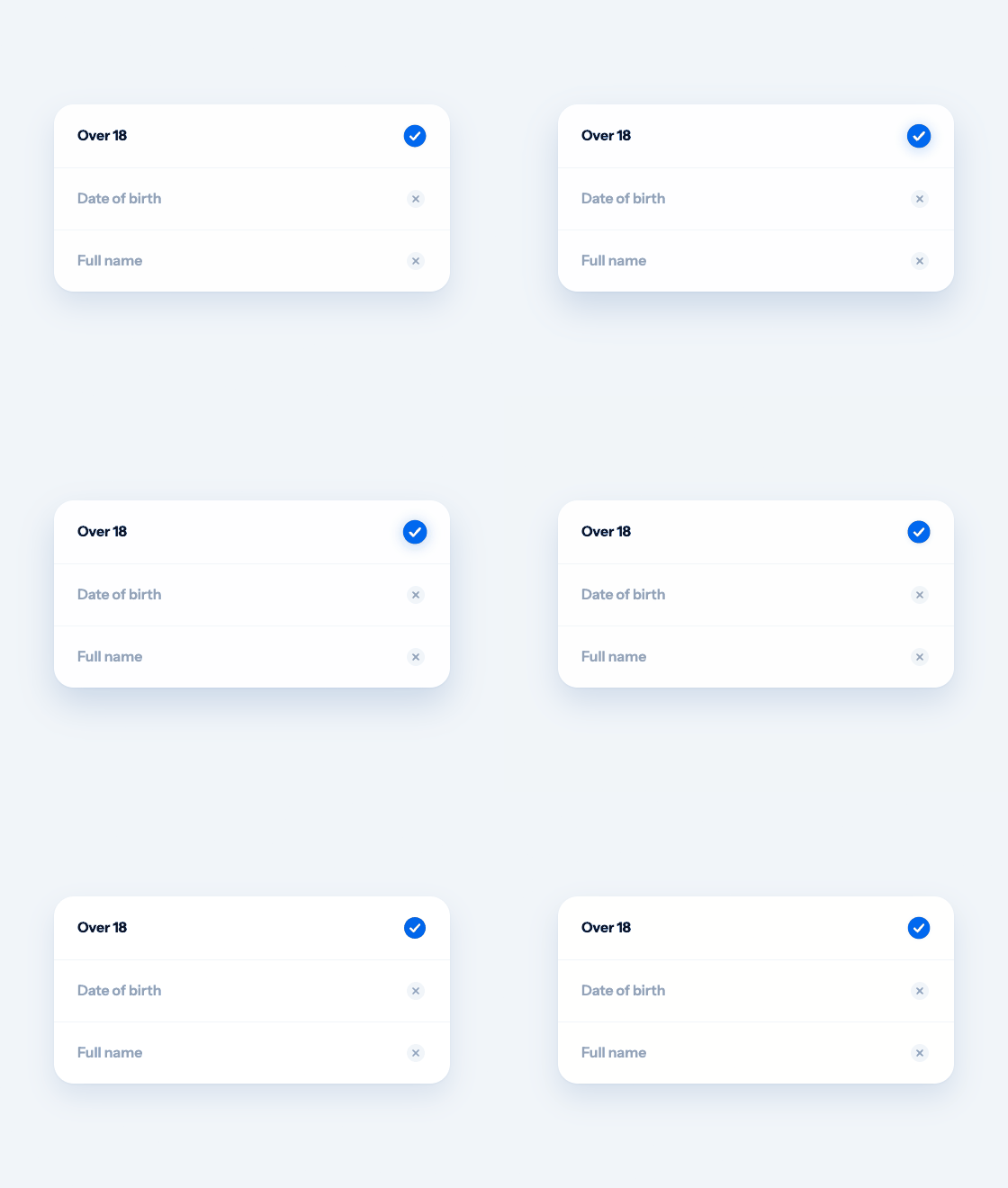
Identification
Attributes arrive signed by the party that issued them. Name, date of birth and address arrive as attributes, at the level of assurance the journey requires.
SCA
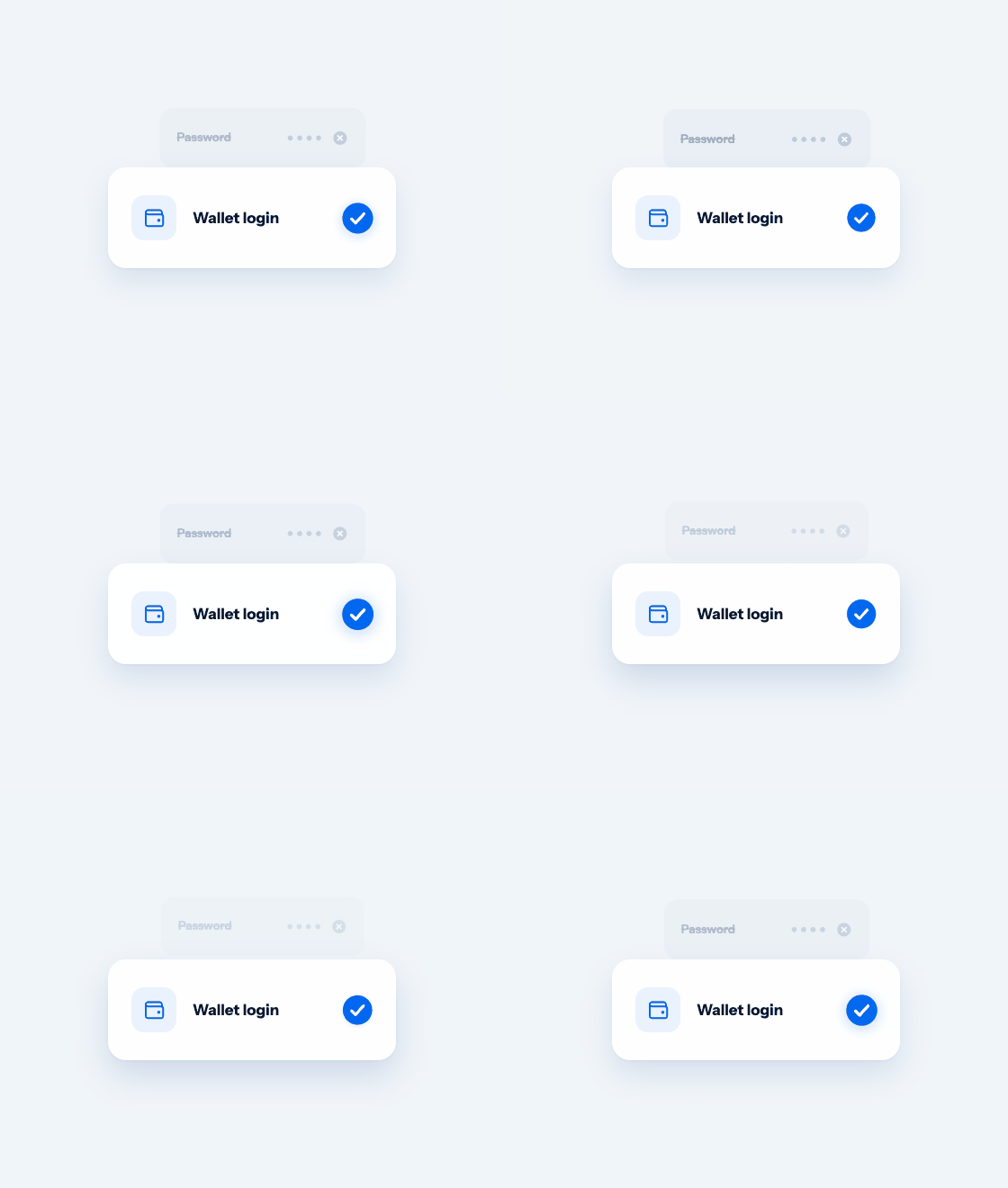
Login and authentication
Returning customers authenticate with the wallet they already carry. The key stays on their device, and the identity is the same one that opened the account.
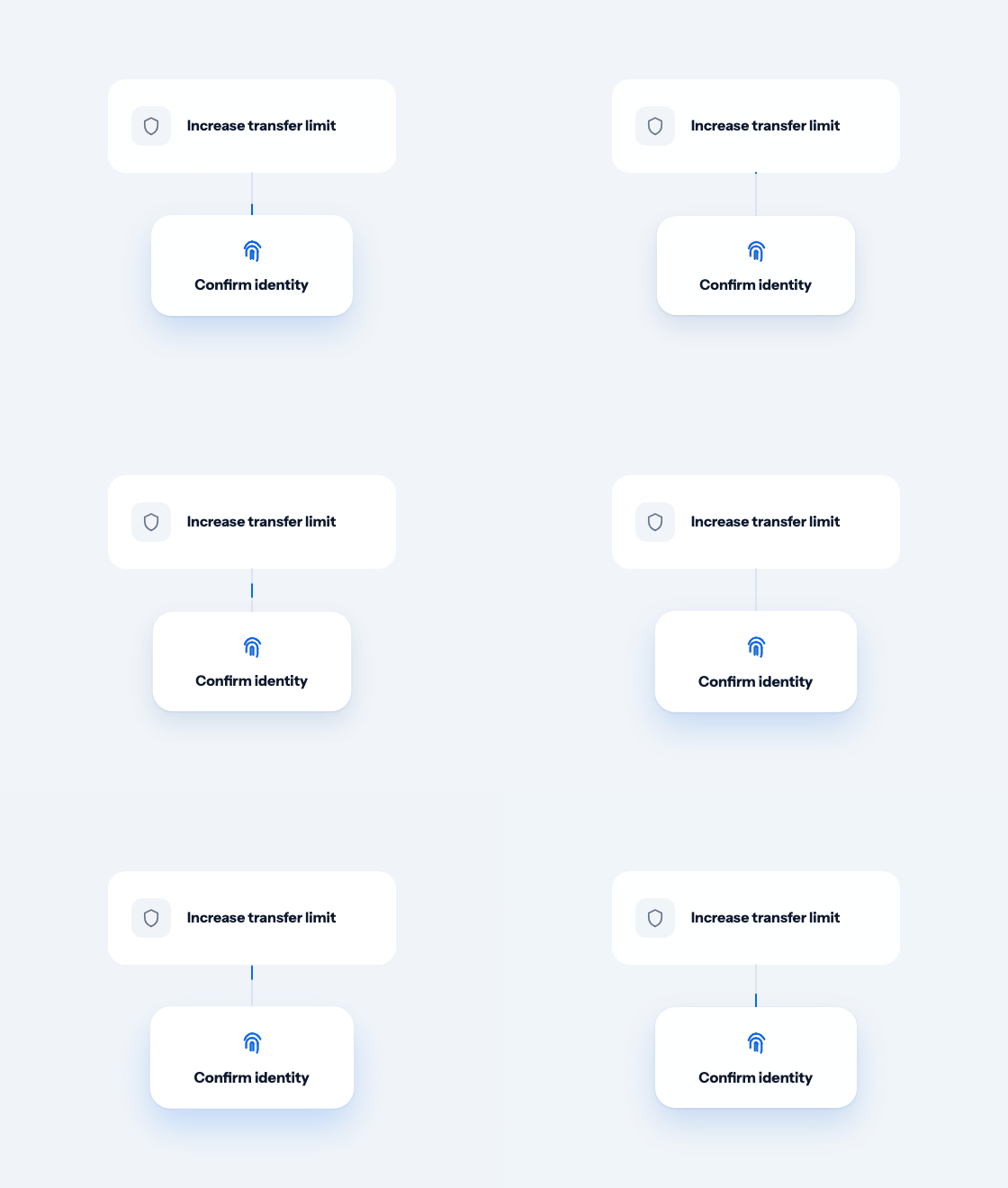
Signing
A qualified signature requires an identity verified at high assurance. Once that check is complete, the signature is applied in the same session.
Test-run your customer journey today
Pick the flow that worries you most. We put a live wallet through it and show your team exactly what lands in your systems, at which assurance level.